NREMT EMT EXAM PREP 2026
Prepia IncEducation
4.624.00 Reviews
- Version
- 2.1.020
- Installs
- 10.00K
- Age Rating
- Everyone
Screenshots
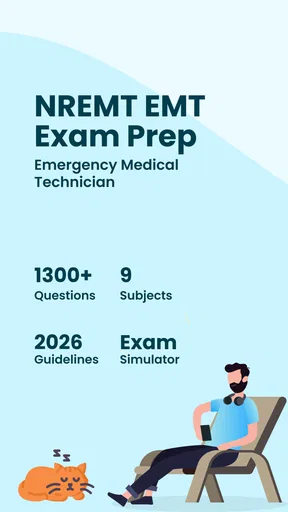
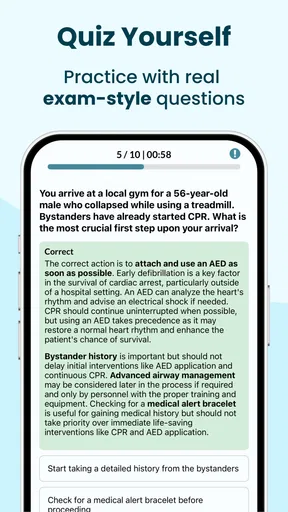
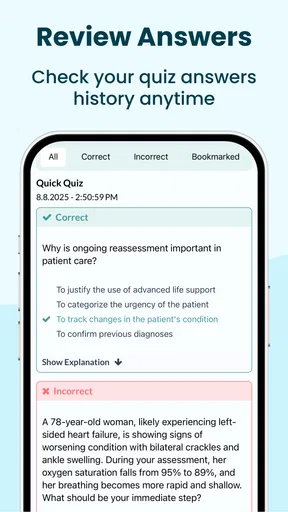
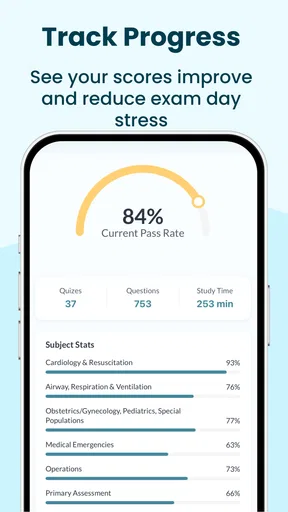
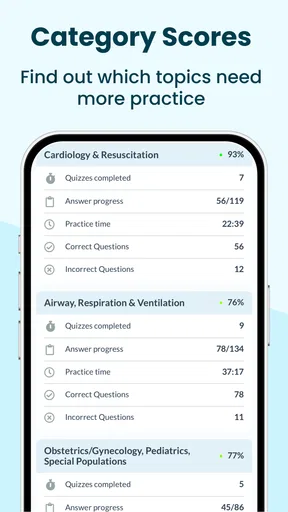
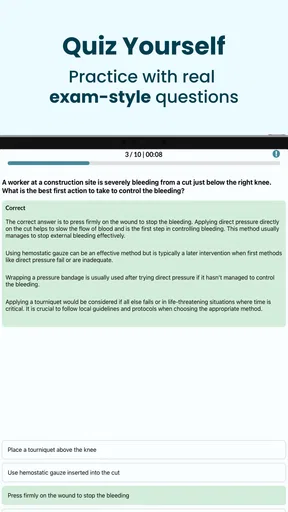
Our Review of NREMT EMT EXAM PREP 2026
 Analysis by Appyee
Preparing for the NREMT EMT exam is less about reading one more chapter and more about building a dependable decision-making habit. I found NREMT EMT EXAM PREP 2026 useful because it puts practice questions and exam-style simulation at the center of that process instead of treating quizzes as a small extra feature. It is a free education app from Prepia Inc, aimed specifically at people working toward EMT certification.
My first impression was that it makes a sensible companion for short study sessions. I could open it when I had a limited amount of time, work through targeted practice, and use the result to decide what deserved attention next. That is a better fit for a busy EMT student than a large textbook when the immediate goal is to test recall under pressure. Still, I would not treat it as a complete replacement for an EMT course, instructor guidance, skills practice, or official examination information.
The app has an average rating of 4.6 from around 217 ratings, with more than 10 thousand installs. Those figures suggest that it has found a real audience, although they should not be confused with proof that it matches every learner’s preferred study method. Its content rating is Everyone, and it is free to install, while optional in-app purchases range from $7.99 to $59.99 per item. I would therefore begin with the free experience and decide only later whether paid material adds enough value to my own routine.
How I would build a reliable study routine
I would make each session answer one clear question: what am I trying to improve today? I’d alternate focused practice with occasional mixed review, and jot down the clue behind any uncertain answer so the next session has a purpose. That small routine also makes it easier to notice whether a weak result comes from missing knowledge or from rushing through the scenario.
Start with a baseline instead of guessing
The most useful way to begin is not by trying to answer every question perfectly. I would take an initial practice session under reasonably quiet conditions and record the topics that caused hesitation, not just the questions I answered incorrectly. A wrong answer is obvious; a slow or uncertain answer can reveal a weakness that a simple score hides.
That baseline gives the app a practical role. Rather than opening it randomly and collecting disconnected quiz results, I can use each session to investigate a specific problem. If airway decisions feel less automatic than patient assessment, I can focus the next session on that area. If I repeatedly change a correct answer because I distrust my first reasoning, I can mark that as a confidence issue rather than a pure knowledge gap.
I recommend keeping a small error log outside the app. For each missed or uncertain question, I would write the topic, the clue I overlooked, and the reason the better answer was preferable. This is more valuable than copying the entire question. The goal is to recognize the pattern next time: a priority problem, a contraindication, a change in patient condition, or a tempting answer that sounds reasonable but is not the best first action.
A realistic everyday use case would be a student commuting home after class. Instead of attempting a long study block while tired, the student could complete a short targeted set, review the explanations or answer logic available in the session, and add two or three notes to the error log. The next morning, that same student could revisit the notes before starting another practice round. The app becomes part of a repeatable loop rather than a source of one-time cramming.
Use simulation differently from ordinary practice
Targeted questions and exam simulators serve different purposes. Targeted practice is where I would slow down, identify patterns, and learn from mistakes. A simulator is where I would test whether I can maintain that reasoning when questions arrive in a less comfortable sequence and the session feels more like an assessment.
I would avoid using the simulator every day at the beginning. Frequent full-length testing can create the illusion of progress because it produces a score, but it may not repair the underlying weakness. A better sequence is to use focused practice during the week, then schedule a simulator after enough review has taken place. The result can show whether the improvement transfers beyond one familiar topic.
There is also a useful distinction between knowledge and endurance. If I know the material early in a session but begin making careless choices later, I need a different response than someone who misses the same concept from the first question onward. The first problem may be concentration and pacing; the second is more likely a content gap. I would use the app’s practice format to separate those two situations rather than treating every low result as evidence that I need to reread everything.
Settings and small choices worth checking
Before settling into a routine, I would inspect the available study controls and question options rather than accepting the default setup automatically. The useful choice depends on the purpose of the session. A learner reviewing one weak area should not approach the app in exactly the same way as a learner rehearsing a broad exam session.
For focused work, I would choose the narrowest relevant practice option available and keep the session short enough to review every mistake. For exam rehearsal, I would use a broader mix and resist stopping after a few difficult questions. The trade-off is straightforward: narrow sessions provide clearer feedback, while mixed sessions better test whether I can identify the right approach without being told the topic in advance.
I would also check whether answer explanations, review screens, or result summaries can be revisited after a session. If the app presents a review option, I would use it immediately, while the reasoning is still fresh. Waiting until the end of the week makes it harder to remember why an answer seemed attractive. If a setting controls question order or topic selection, I would change it occasionally so that I do not memorize a predictable sequence.
One practical habit is to keep the same general conditions for baseline sessions: similar time of day, no outside notes, and no pausing simply because a question feels uncomfortable. That makes the results more comparable. I would still use relaxed sessions for learning, but I would label them as learning sessions rather than interpreting their scores as exam readiness.
The app runs on Android devices using version 7.0 or later, so compatibility is broad for many older phones and tablets. The current version is 2.1.020. I would still install it on the device I actually plan to study with, because screen size, typing comfort, battery condition, and notification interruptions can all affect a practice session. A larger screen may make review easier, while a phone is more convenient for short bursts.
Faster patterns that improve review quality
Experienced users do not necessarily answer more questions; they waste less time between questions. My preferred pattern would be: attempt, commit to an answer, inspect the result, name the deciding clue, and move on only after I understand the mistake. That prevents the common habit of tapping through a large set and reviewing only the final percentage.
I would use a three-part label for each difficult item: knowledge, judgment, or attention. “Knowledge” means I did not know the relevant concept. “Judgment” means I knew the facts but selected the wrong priority. “Attention” means I missed a word, condition, or change in the scenario. This simple classification makes the next session more precise. Knowledge errors call for study; judgment errors call for comparing options; attention errors call for slower reading and better pacing.
Another efficient pattern is to revisit mistakes after a delay rather than immediately repeating the same question until it feels familiar. Immediate repetition can test memory of the wording instead of understanding. I would first review the reasoning, then work on a different set, and return later to see whether I can apply the principle in a new context.
For users with only fifteen minutes, I would divide the time deliberately: a few minutes for targeted questions, several minutes for reviewing errors, and the remainder for recalling the key rule without looking at the answer. That last step matters. If I can recognize an explanation but cannot state the principle in my own words, the learning is not finished.
For users with a longer block, I would combine a targeted session with a short mixed session. The first repairs a weakness; the second checks whether I can still reason when the topic is not announced. This pairing is more informative than doing two identical sets because it tests transfer, which is often where exam preparation breaks down.
Where the app is genuinely helpful
The strongest part of NREMT EMT EXAM PREP 2026 is its direct connection between practice and exam simulation. Someone who already has course notes and needs a convenient way to apply them can use the app to turn passive reading into active recall. It is also a good fit for people who prefer measurable sessions and need a clear prompt to study regularly.
I especially like the way this format can expose overconfidence. A learner may feel comfortable reading about a topic, then discover that a scenario question requires choosing between several plausible actions. Practice makes that gap visible. The app is therefore more useful when I treat wrong answers as diagnostic information rather than as a judgment of ability.
It can also support group study without requiring everyone to use it at the same moment. Two classmates could complete separate practice sessions, compare the topics that caused trouble, and explain their reasoning to each other. The important part is to discuss why one option is better, not merely announce the letter or wording of the selected answer.
Because the app is free to start, it is easy to test whether its question style suits me before spending money. That matters because exam-prep tools vary widely. Some learners want detailed lessons first; others want a large amount of question practice. This app makes more sense for the second group, especially when paired with a reliable source for deeper instruction.
Limits I would keep in mind
The focused practice format can become narrow if I rely on it alone. Answering questions is not the same as performing patient assessment, communicating with a team, handling equipment, or developing the physical skills expected in EMT training. I would never use a strong app result as evidence that hands-on preparation is complete.
There is also a risk of chasing the score. A high percentage can come from remembering familiar questions, recognizing repeated wording, or practicing only comfortable topics. To counter that, I would rotate subjects, mix question types when possible, and occasionally complete a session without looking at notes beforehand.
The optional purchases deserve a thoughtful approach. The free installation lowers the barrier to trying the app, but paid items can change the overall cost of a study plan. I would compare any purchase with what I already own, including class materials, instructor resources, and other question banks. Paying for more questions is not automatically worthwhile if the real problem is misunderstanding a core concept.
I would also be cautious about treating any third-party preparation app as the final authority on eligibility, registration, scheduling, or current examination policy. Those practical details can matter just as much as study performance, so I would verify them through the appropriate official channels and use this app for preparation rather than administration.
Who should use it and who should choose another approach
I would recommend it to an EMT student who wants structured question practice, benefits from exam-style pressure, and is willing to review mistakes carefully. It is particularly suitable for filling small gaps during a busy week, checking progress after classroom study, or adding variety to a revision plan that has become too dependent on rereading notes.
I would be less enthusiastic about using it as the only resource for a beginner who has not yet learned the underlying material. Practice questions can reveal what is wrong, but they do not always provide the full teaching sequence needed to build a foundation. That learner would be better served by a formal course, instructor feedback, and a comprehensive reference, with the app added once the basic concepts are in place.
A learner who dislikes multiple-choice practice or needs extensive visual and hands-on instruction may also prefer another option. A textbook can provide fuller explanations, a classroom can clarify confusing judgment calls, and skills lab practice can develop abilities that no quiz can reproduce. In my view, the best comparison is not “app versus everything else,” but “app for active testing alongside the resources that teach and demonstrate the material.”
My verdict after fitting it into a real plan
NREMT EMT EXAM PREP 2026 works best as a disciplined practice companion. Its value comes from how I use the targeted questions and simulators: first to locate weaknesses, then to repair them, and finally to test whether the improvement survives a broader session. That workflow is more important than simply opening the app and collecting scores.
I would install it for the convenience of short study blocks and the ability to move from focused review to exam-style practice in the same education app. I would keep an error log, vary the session format, and review reasoning instead of rushing through question counts. I would also keep a textbook, course material, or instructor support nearby for subjects that require deeper explanation.
For an app released on August 8, 2025, and maintained by Prepia Inc through its current version, it presents a focused option for EMT exam preparation rather than a broad medical-learning platform. The Everyone age rating makes it approachable for a wide audience, while the free starting point makes experimentation easy. My recommendation is positive, with one condition: use it as a training instrument, not as a substitute for the full preparation process.
The most effective habit is simple: practice with a purpose, review the reason behind every uncertain answer, and return later to prove that you can apply the idea without relying on familiar wording. If that matches the way you learn, this app can earn a useful place in your NREMT study routine. If you need complete lessons, official guidance, or hands-on instruction in one package, I would choose a broader solution and use this app only as one part of the plan.
Verdict
Strengths of NREMT EMT EXAM PREP 2026
- Covers key EMT topics with concise explanations and practice questions.
- Useful for reviewing during short study sessions on a phone.
- Helps identify weak subject areas through repeated quiz practice.
- Includes exam-style questions to build familiarity with test wording.
- Suitable for both first-time learners and final exam revision.
Limitations of NREMT EMT EXAM PREP 2026
- Some content may require updates as NREMT policies and guidelines change.
- Practice questions may not fully reflect the difficulty of the real exam.
- Limited value without hands-on training and instructor guidance.
- A large question bank can feel repetitive during extended study sessions.
- Advanced features or complete access may require an in-app purchase.
Other Releases by Prepia Inc
View All
AMERICAN NURSE EXAM PREP 2026
Education4.8

Prepia PTCB PTCE Exam Prep
Education4.7

ASWB BSW LCSW MSW | Exam Prep
Education4.7

ATI TEAS Exam Prep 2026
Education4.7
Similar Picks in This Category
View All
Duolingo: Language Lessons
Duolingo4.7

Google Classroom
Google LLC2.8

Unacademy: Learn & Crack Exams
Unacademy3.2

Bible App for Kids
Life.Church4.4

Cake - Learn English & Korean
Cake Corp.4.7

Brainly: AI Homework Helper
Brainly4.5
Frequently Asked Questions
What is NREMT EMT EXAM PREP 2026?
NREMT EMT EXAM PREP 2026 is a study app designed to help aspiring Emergency Medical Technicians prepare for the National Registry of Emergency Medical Technicians cognitive examination. It typically organizes practice questions by important EMT subjects, such as airway management, patient assessment, trauma, medical emergencies, operations, and obstetrics. It should be used as a revision companion, not as a replacement for an accredited EMT course or official NREMT guidance.
Does NREMT EMT EXAM PREP 2026 include realistic practice questions?
The app is intended to provide exam-style practice through multiple-choice questions, topic-based quizzes, and review sessions. This format can help you become familiar with clinical scenarios, improve recall, and identify subjects that need more attention. However, users should remember that practice questions may not exactly match the wording, difficulty, or adaptive behavior of the real NREMT exam, so preparation should also include official resources and classroom instruction.
Can this app replace EMT school or official NREMT study materials?
No. NREMT EMT EXAM PREP 2026 is best viewed as a supplementary study tool. It cannot replace hands-on training, skills testing, instructor feedback, clinical education, or the current examination policies published by the NREMT. Before relying on any answer or explanation, compare the information with your course textbook, local protocols, and official NREMT materials, especially because medical guidelines and certification requirements can change over time.
Is NREMT EMT EXAM PREP 2026 suitable for beginners and repeat test-takers?
The app may be useful for both new candidates and students retaking the EMT examination, but the benefits can differ depending on your background. Beginners can use topic-based questions to reinforce lessons after completing foundational coursework, while repeat test-takers may use performance results to focus on weak areas. It is generally more effective when combined with structured study sessions rather than used for last-minute memorization alone.
Does the app work offline, and are there any costs or advertisements?
Offline availability, subscription requirements, advertisements, and access to advanced question banks can vary according to the app version and the platform where it is downloaded. Check the Google Play Store or Apple App Store listing before installing, paying particular attention to in-app purchases, renewal terms, privacy permissions, and the date of the latest update. Downloading from the official store also helps ensure that you receive the legitimate application.
